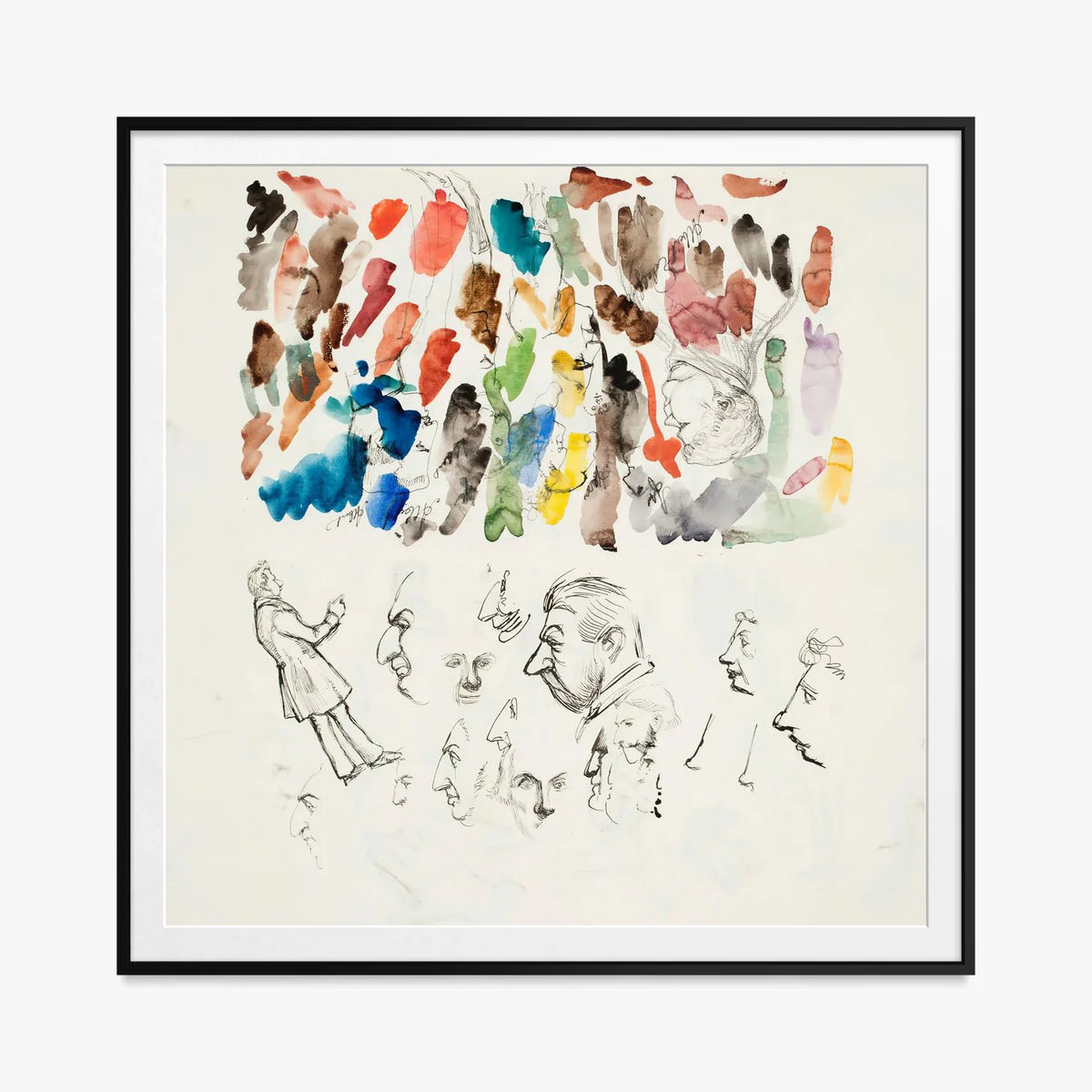
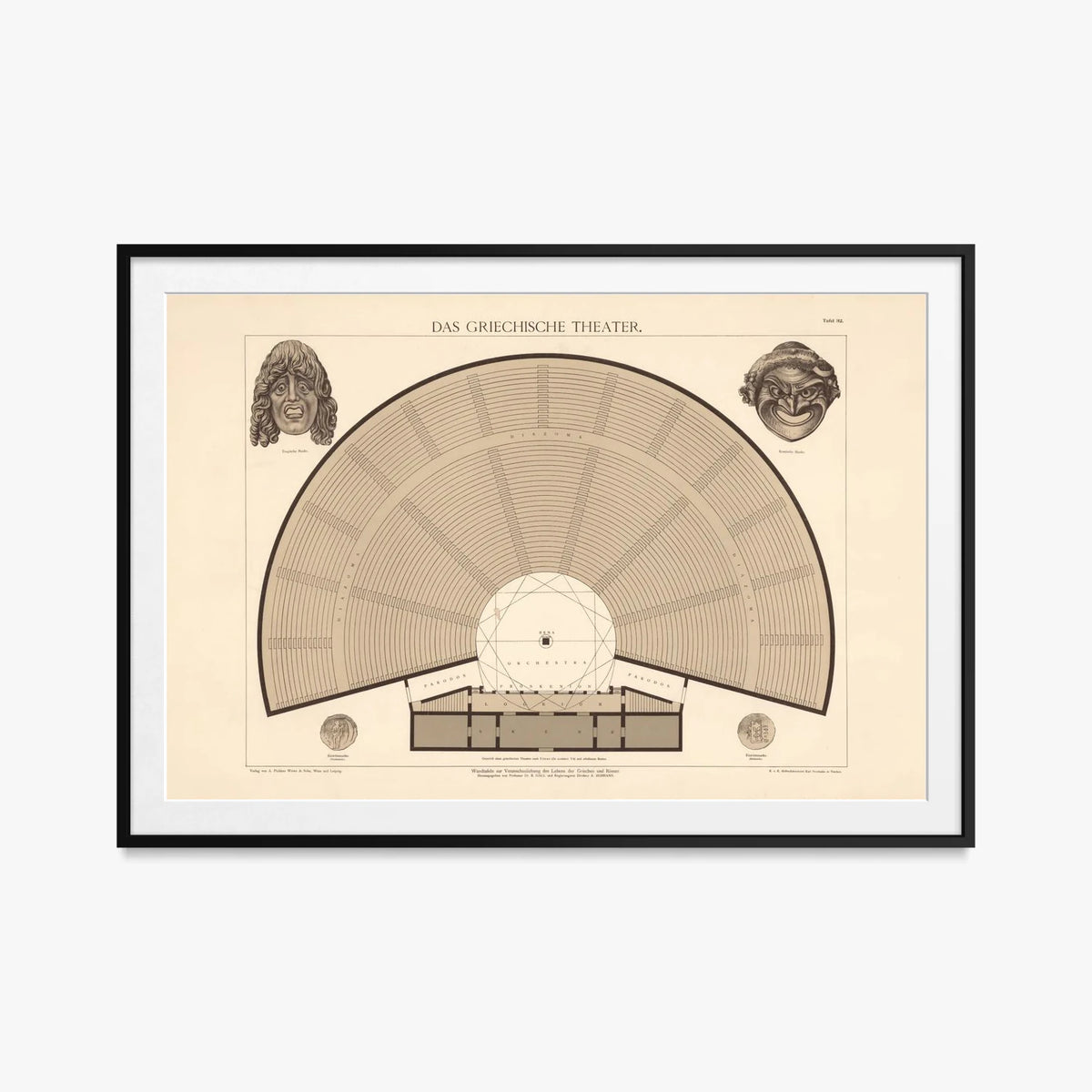
A. Pichler's Widow & Son: antiquity explained on school walls
Behind this name is a Viennese publishing house and printing press. When its founder, Anton Pichler, died in 1823, his widow took over the business and led it with great skill; from 1851, with her son Franz as a partner, it became known as A. Pichler's Widow & Son. The company focused mainly on schoolbooks and large educational wall charts, printed to show students nature, history, and art. Greek Vase Painting II and The Greek Theater come from this tradition: antiquity redrawn with clarity, to be viewed from a distance and understood at a glance. Bringing one of these prints into your home means cherishing that pursuit, not just filling an empty space.
Crafted to last
Each Framed Art Print is made with fine art paper, then finished and framed by hand in Italy. We don't chase immediate impact: we aim for a finish that stays true to the original colors over time, because a work meant to be passed down deserves a foundation as solid as the story it tells.
Why choose Miriaci
Choosing Miriaci means trusting in work carried out with care, from printing to delivery.
-
Careful shipping: each piece is shipped protected, ready to hang.
-
Archival materials: 300 g/m² fine art paper and frames selected to last.
-
Real support: our team is here to help you choose the artwork best suited to your space.
A work of art, not just decoration
A print doesn't just fill a wall: it carries a subject, an era, a story that continues to speak to those who look at it. The works by A. Pichler's Widow & Son curated by Miriaci remain true to this principle — pieces chosen for their meaning, even before their aesthetic appeal.
Aesthetics fade. Meaning remains.